Paying costs
In Grand Archive, you pay for cards with other cards. Either you put cards from your hand into your memory, the face-down pile in front of you, or you spend cards that are already there. Which one you do depends on the card’s cost.
Reserve cost or memory cost?
Every card shows its cost in the top-left corner. The color tells you what kind of cost it is.


- Reserve costs are yellow. Most main deck cards have one, like Fireball. You pay it with cards from your hand.
- Memory costs are blue. Most material deck cards have one, like champions and regalia such as Polaris. You pay it with cards already in your memory.
On a champion, the memory cost sits just beneath its level.
Paying a reserve cost
To pay a reserve cost, choose that many other cards from your hand and put them into your memory face down. This is called reserving them.
For example, Fireball has a reserve cost of 4. To play it, you put four other cards from your hand face down into your memory.
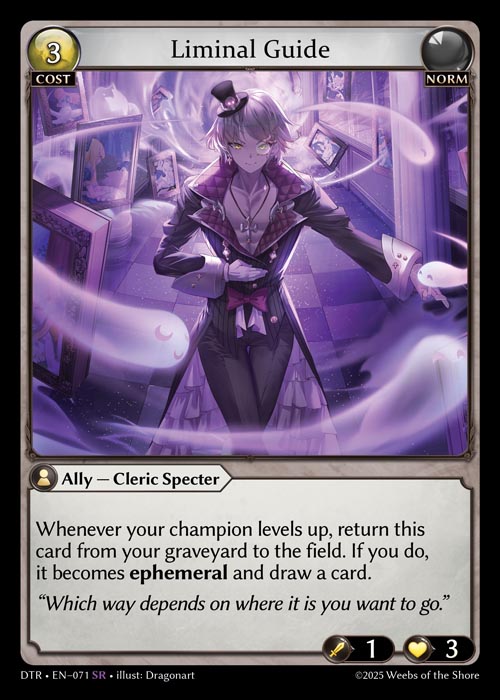

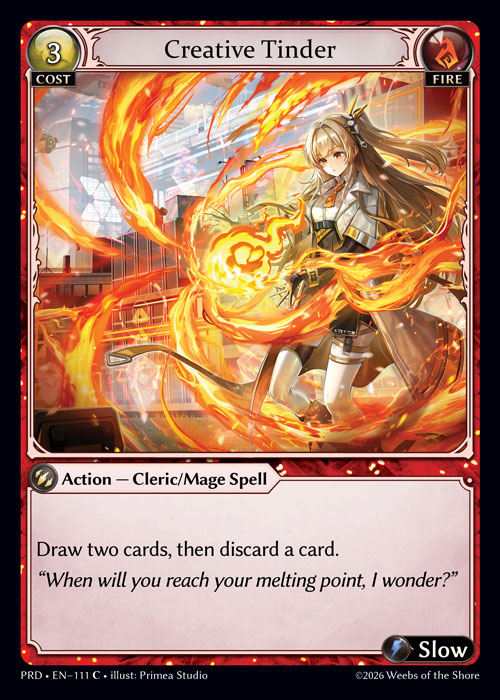


You want to play Fireball. It has a reserve cost of 4.
- The cards come back. Cards you reserve stay in your memory until your next Recollection phase, early in your next turn, when every card in your memory returns to your hand.
- The payment sticks. Reserved cards stay in your memory even if your opponent stops the card you paid for.
- No swapping. You can change which cards you’re reserving until you confirm and play the card. After that, they’re locked in.
Paying a memory cost
A memory cost is paid by banishing cards, which removes them from the game, so they don’t come back to your hand. You can pay each point of a memory cost in one of two ways.
Random banishment from your memory
The usual way: that many cards are chosen at random from your memory and banished. You don’t get to pick which ones go.
For example, Polaris, Twinkling Cauldron has a memory cost of 1. To materialize it, which means putting it onto the field from your material deck, one card is chosen at random from your memory and banished.
Floating memory
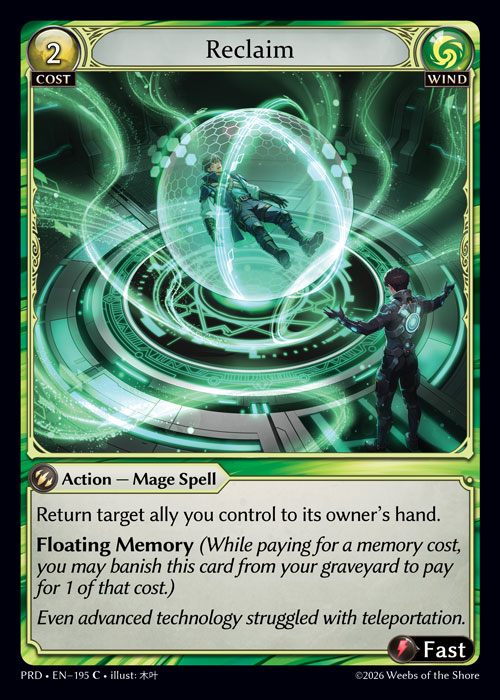
Some cards have Floating Memory, like Reclaim. While you’re paying a memory cost, you may banish a card with floating memory from your graveyard to pay for 1 of that cost. You choose that card yourself, so nothing is taken from your memory at random.
Reclaim is an action, so once it has done its job it goes to your graveyard. From there, its floating memory can help pay for memory costs later in the game.
Using both
You can combine the two. First decide how much of the cost you’ll pay with floating memory, then the rest is chosen at random from your memory.
For example, say you’re paying a memory cost of 3 and Reclaim is in your graveyard. You can banish Reclaim to pay 1, and then 2 cards are chosen at random from your memory and banished.

You materialize Arisanna, Astral Zenith. It has a memory cost of 3.
- The random part is fair. The cards are picked in a fair way, such as shuffling them face down and picking without looking, so every card in your memory has the same chance of being chosen.
- Reserving builds your memory. Every reserve cost you pay adds cards to your memory, and those are the cards you’ll spend on memory costs.
- Some material cards are different. A few material deck cards have a reserve cost instead. You pay those from your hand, just like a main deck card.