Setting up the game
Before the first turn, every player goes through the same steps, in this order:
Step 1 of 7
Place your decks
Put your material deck and your main deck in their zones.
Your play area
There’s no required way to lay out your cards, but the official tournament rules recommend a layout that keeps every zone easy for both players to see. Here’s one player’s side of the table set up that way. You can mirror it left to right.
The places a card can be during the game are called zones:
- Field. Everything you have in play: your champion, allies, weapons, items, and regalia.
- Main deck and material deck. Your two decks. You draw from your main deck, and you bring cards out of your material deck when you level up.
- Memory. Cards you’ve set aside face down to pay for other cards. They come back to your hand early in each of your turns.
- Graveyard. Face-up cards that have been used up, like an action that has done its job or an ally that was destroyed.
- Banishment. Cards removed from the game. Once a card is banished, it almost never comes back.
Your hand is a zone too, even though it isn’t on the table.
Where each one goes:
- Decks on opposite sides. Your main deck goes on one side of you and your material deck on the other.
- Graveyard and banishment by your main deck. The graveyard goes in front of or next to your main deck. Banishment goes in front of the graveyard, or in a sideways pile beneath it, or off to the side.
- Memory closest to you. Keep your memory directly in front of you, near your edge of the table, spread out so each card is easy to pick out. Don’t let it get mixed up with any other face-down cards.
- Everything else toward your opponent. Your champion stands in the center, or in the corner by your material deck. Weapons stay near your champion, regalia stay together, and allies go in front of your memory, beside your champion.
- Your hand stays in your hand. If you need to, you can set it face down on the table for a moment.
Pre-game actions
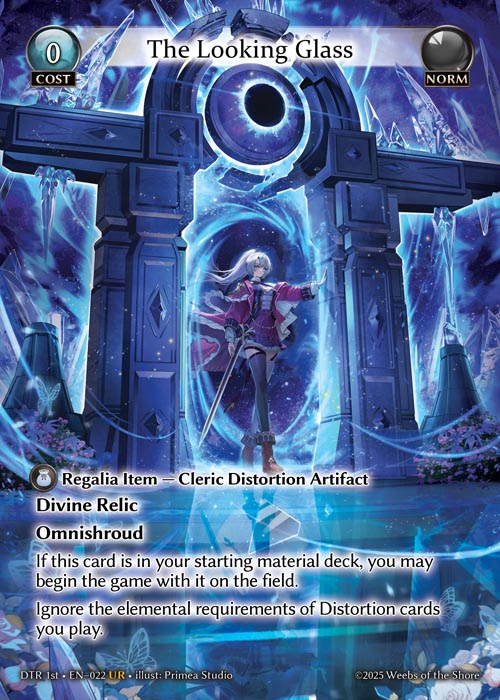
A few cards let you start the game with them already on the field. The Looking Glass, for example, says: “If this card is in your starting material deck, you may begin the game with it on the field.” You put it onto the field during step 5, so it’s already in play when the first turn starts.
Your starting hand
You don’t draw an opening hand as a separate step. It comes from your Spirit’s On Enter ability, so how many cards you start with depends on which Spirit you choose.
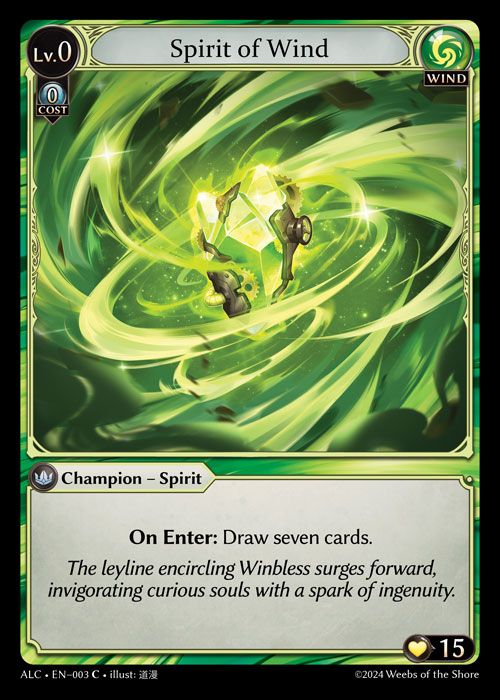
Spirit of Wind says “On Enter: Draw seven cards,” so you start with seven.
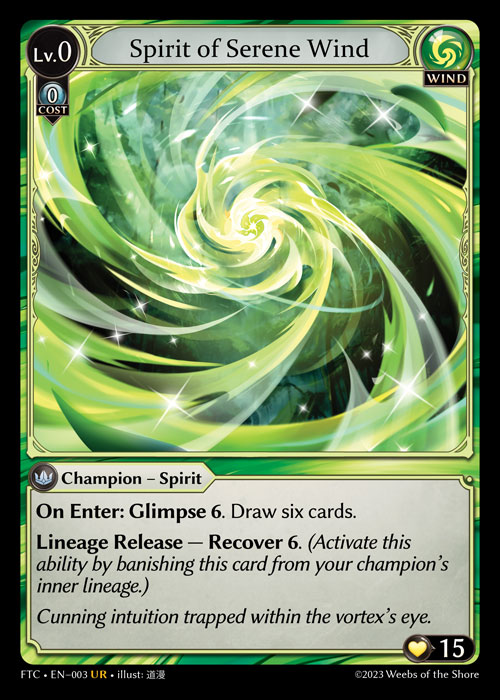
Spirit of Serene Wind says “On Enter: Glimpse 6. Draw six cards.” You start with one card fewer, but first you get to glimpse: you look at the top six cards of your deck, put any of them back on top in any order, and put the rest on the bottom. That lets you shape the hand you’re about to draw.
No one can do anything else until every player has their starting hand.
Playing Pantheon, the multiplayer format? Setup is nearly the same. You also place your Lesser and Greater Boons in your Pantheon zones, everyone puts a Pantheon Barrier token into play when the Spirits are revealed, and turns go clockwise from the first player.